



2027 Toyota Prius: 4 Trims, 8 Builds, All-Wheel Drive on Every Trim

The 2027 Toyota Prius is a 5-seat hybrid hatchback sold in 4 trims, each offered in front-wheel drive or all-wheel drive, which makes 8 builds in all. The headline figure is 55 MPG combined on the LE, and the second one is that all-wheel drive (AWD) is available right across the range for $1,400. For a Central Indiana driver those 2 numbers cover both halves of the year: a long commute in fair weather, and a glazed on-ramp in February. Prices run across a range the table below sets out in full. Our Prius listings show which builds are here now.

Yellow Toyota Prius at night on a city street, seen from the front

Prius at a Glance

2027 Toyota Prius Specification
MSRP at launch $28,755 to $37,170
Builds 8: LE, XLE, Nightshade and Limited, each front or all-wheel drive
Engine 2.0-liter 4-cylinder hybrid, 150 hp
System output 194 hp front-wheel drive, 196 hp all-wheel drive
Fuel economy Up to 59 city, 50 highway, 55 combined
Seating 5
Cargo 23.8 cu ft on the LE, 20.3 cu ft on the rest
All-wheel drive Available on all 4 trims, for $1,400

MSRP at launch (2027 model year), excluding destination. Fuel figures are Toyota's own estimates.

White Toyota Prius parked on a plaza as a man walks toward it

Trims and Prices

Four trims, doubled by drivetrain. All-wheel drive is a flat $1,400 on every one of them, which is an unusually consistent step.

Build MSRP at Launch Drive Best For
LE $28,755 Front The mileage champion and the value of the range
LE AWD $30,155 All-wheel The same car, with traction
XLE $32,200 Front The step up in equipment
Nightshade $33,005 Front The XLE with blackout badging
XLE AWD $33,600 All-wheel Equipment plus traction
Nightshade AWD $34,405 All-wheel Blackout styling plus traction
Limited $35,770 Front The audio and parking technology
Limited AWD $37,170 All-wheel The top of the range

MSRP at launch (2027 model year), excluding destination. Destination, processing and handling adds $1,295.

The LE is the interesting row. It is the cheapest Prius and also the most efficient one by a clear margin, because it sits slightly lower than the trims above it and slips through the air a little better. Buying up the ladder costs you fuel economy on this car, which is not how most lineups work.

Deals move month to month, and the current new Toyota specials show what is running now. You can start a financing application or get a figure on your trade before you come in.
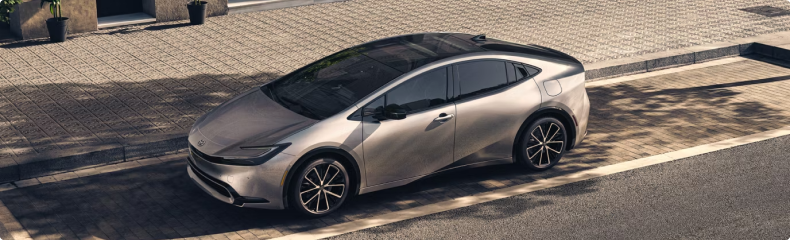

Silver Toyota Prius parked at a kerb, seen from above

Fuel Economy

Toyota supplies these figures as estimates for the 2027 model year.

Build City Highway Combined
LE 59 50 55
LE AWD 56 49 53
XLE, Nightshade and Limited 54 46 51
XLE AWD, Nightshade AWD and Limited AWD 51 45 48

The spread from top to bottom is 7 MPG combined, 55 down to 48. Two separate things cause it. Moving up from the LE costs 4 MPG, and adding all-wheel drive costs 2 or 3 more. A buyer who wants the absolute maximum is looking at exactly one build, the front-drive LE.

City higher than highway, on every row, is the hybrid signature. The driving that punishes most cars is the driving this one is best at.

Rear detail of a yellow Toyota Prius showing the full-width tail lamp and Prius lettering

The Hybrid System

  • Engine: a 2.0-liter 4-cylinder, 150 hp at 6,000 rpm and 139 lb-ft between 4,400 and 5,200 rpm.
  • Front electric motor: 111 hp.
  • Rear electric motor, on all-wheel-drive builds only: 40 hp.
  • Total system output: 194 hp on front-wheel drive, 196 hp on all-wheel drive.
  • Battery: lithium-ion, 222 volts.
  • Transmission: an electronically controlled continuously variable transmission.

That 194 hp figure is worth sitting with, because it is what a Prius used to not be. This is a hybrid hatchback with the output of a competent small sedan, returning better than 50 MPG. The system figure is Toyota's own rating for everything working together and is not the sum of the parts above it.

Silver Toyota Prius on a wet road at night, seen from the rear three-quarter

Front or All-Wheel Drive

All-wheel drive on the Prius works by adding a second electric motor to the rear axle. Nothing runs mechanically from the engine to the back wheels, which is how it fits under a car this size and this efficient.

Front-wheel drive All-wheel drive
Extra cost - $1,400 on every trim
System output 194 hp 196 hp
Best combined economy 55 MPG (LE) 53 MPG (LE AWD)
Fuel tank 11.3 gal 10.5 gal

The tank row is the one people miss. All-wheel-drive builds carry 0.8 fewer gallons, and they use fuel slightly faster, so the range difference is larger than the MPG figures alone suggest. An LE holds 11.3 gallons at 55 MPG combined, which works out to roughly 620 miles between fills; an LE AWD holds 10.5 at 53, or roughly 555.

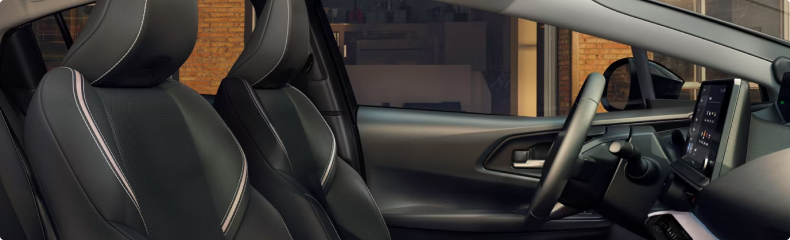
Toyota Prius front seats and dashboard seen through the open passenger door

Space and Dimensions

Measurement 2027 Prius
Length 181.1 in
Width 70.2 in
Height 55.9 in on the LE, 56.3 in on the rest
Wheelbase 108.3 in
Ground clearance 5.6 in on the LE, 6.0 in on the rest
Cargo 23.8 cu ft on the LE, 20.3 cu ft on the rest
Passenger volume 91.2 cu ft
Curb weight 3,097 to 3,340 lb

The cargo figure is the practical surprise in that table, and it runs the opposite way to the price. The LE carries 23.8 cubic feet where every trim above it carries 20.3, so the cheapest Prius is also the most useful one for luggage. It is a hatchback, so that space opens wide and swallows awkward loads better than the number suggests.

Three more figures are worth knowing:

  • Ground clearance is 5.6 inches on both LE builds and 6.0 elsewhere. This is a low car and it is meant to be.
  • Curb weight runs from 3,097 lb to 3,340 lb, which is light by any current standard and part of why the fuel figures land where they do.
  • Wheelbase is 108.3 inches on all 8 builds, so the LE and the Limited ride on exactly the same footprint.
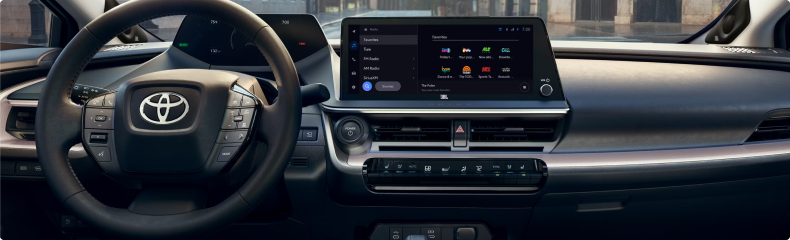
Toyota Prius dashboard with the centre touchscreen showing an audio menu

What Changes By Trim

Feature Standard On Available On
6-speaker audio LE, XLE, Nightshade, in both drivetrains Not offered elsewhere
8-speaker JBL Premium Audio with amplifier Limited, Limited AWD Not offered elsewhere
Front and Rear Parking Assist with Automatic Braking The 6 builds above the LE LE, LE AWD
Blackout badging Nightshade, Nightshade AWD Not offered elsewhere
Digital rearview mirror Not standard anywhere Limited, Limited AWD
Limited Premium Package: Advanced Park and Panoramic View Monitor Not standard anywhere Limited, Limited AWD

Three rows there decide most of the choice. Parking assist becomes standard the moment you step past the LE, while the JBL system and the self-parking package are Limited-only and cannot be reached from below.

Yellow Toyota Prius in profile crossing a city intersection

Safety

Toyota Safety Sense 3.0 is standard on all 8 builds, including its pre-collision system with pedestrian detection. Nothing in that suite is held back for the more expensive trims, so an LE arrives with the same collision-avoidance equipment as a Limited AWD.

What does change is the parking equipment. Front and Rear Parking Assist with Automatic Braking is standard from the XLE upward and optional on the 2 LE builds, and the 2 Limited builds can add self-parking and a 360-degree camera view on top of it.

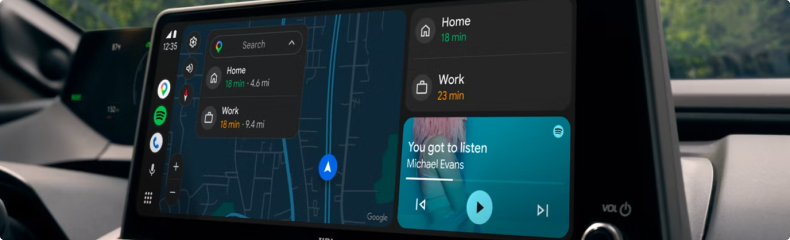
Close-up of the Prius touchscreen showing a navigation map with home and work destinations

Connected Services

Remote Connect and Safety Connect come with a 5-year trial across all 8 builds. Wi-Fi Connect carries a trial of up to 30 days or 3 GB, also across the range.

Drive Connect is the one that splits the lineup. It bundles cloud navigation with Google points-of-interest data, an intelligent assistant and Destination Assist, and it needs a subscription after the trial. The Limited and Limited AWD get a 3-month trial with the car. The other 6 builds are capable of it but come with no trial, so the subscription starts as a purchase.

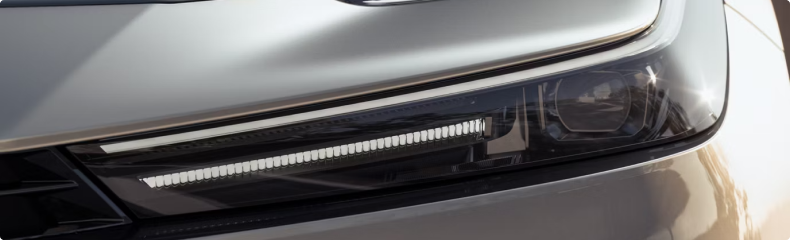
Close-up of a Toyota Prius headlamp and front bumper

Warranty

Coverage Term
Basic 36 months or 36,000 miles
Powertrain 60 months or 60,000 miles
Corrosion perforation 60 months, unlimited miles
Restraint systems 60 months or 60,000 miles
Hybrid system 96 months or 100,000 miles
Hybrid battery 120 months or 150,000 miles

Every one of those terms is identical on all 8 builds. A no-cost maintenance plan and 24-hour roadside assistance are included as well.

The hybrid battery line answers the question most hybrid shoppers arrive with, at 10 years and 150,000 miles. The corrosion term matters here for a local reason, which is that it is the only coverage with no mileage cap and Indiana roads carry a great deal of salt.

Yellow Toyota Prius driving a city street at night, seen from behind

Driving It Here

The Prius fits a Central Indiana commute almost exactly, and the all-wheel-drive option closes the one gap it used to have.

Hamilton County sends about 56,000 residents into Marion County, roughly a quarter of its workforce, and the average one-way trip from ZIP 46060 runs 27 minutes down State Road 37, US 31 or I-69. Call that 250 miles a week of mixed traffic. At 55 MPG combined an LE covers it on about 4.5 gallons, and the range figures above mean a fill roughly every 2 weeks rather than every few days.

Winter is where the $1,400 question gets answered. Central Indiana sits near the rain and snow line, so freezing rain and freeze-thaw shape a morning more than accumulation does, and normal snowfall is only 25.5 inches a year, while roughly 27 days see a high at or below freezing. All-wheel drive helps most on a glazed on-ramp, which is the common case here, and least in deep snow, which is not. On a car this light it is worth more than the 2 or 3 MPG it costs.

The limitation is clearance, and it is worth saying plainly. The county is flat and drains slowly on the Tipton Till Plain, so standing water after a hard rain is routine, and 5.6 inches is not much car to put through it. A Prius is the right answer for a paved commute and the wrong one for a long gravel driveway, and that is worth knowing before you buy rather than after.

Silver Toyota Prius at a kerb as a couple approach with luggage

Which Trim Should You Choose

Which trim you land on depends on whether you are buying the fuel economy or the equipment, because on this car you cannot have both.

  • The mileage pick: LE. It is the cheapest build and the most efficient one at 55 MPG combined, and it carries the largest cargo hold at 23.8 cubic feet. Everything above it costs 4 MPG and 3.5 cubic feet.
  • The winter pick: LE AWD. All-wheel drive for $1,400, still 53 MPG combined, still the big cargo hold.
  • The equipment pick: XLE. Parking assist becomes standard here, which is the most useful single step in the ladder.
  • The styling pick: Nightshade. It is an XLE with blackout badging, for $805 more.
  • The technology pick: Limited. The 8-speaker JBL system is standard, the digital rearview mirror is available, and the Limited Premium Package with Advanced Park and the Panoramic View Monitor cannot be had on anything else.

Frequently Asked Questions

At launch, from $28,755 for the LE to $37,170 for the Limited AWD, before a $1,295 delivery, processing and handling fee. Equipment changes what an individual car costs, so the figure that counts is the one on its own listing in our inventory.

Up to 59 city, 50 highway and 55 combined on the front-drive LE. The XLE, Nightshade and Limited are rated 54 city, 46 highway and 51 combined, and the all-wheel-drive versions of those 3 are rated 51, 45 and 48. All-wheel drive on the LE gives 56, 49 and 53. Every figure here is a Toyota estimate.

Yes, on all 4 trims, for a flat $1,400. It works by driving the rear wheels with a second electric motor rather than by running a driveshaft to the back of the car.

194 horsepower with front-wheel drive and 196 with all-wheel drive. That is the combined system figure. The gasoline engine alone makes 150 hp, and the front electric motor adds 111.

The front-wheel-drive LE, at 55 MPG combined. It is also the least expensive build in the range and the one with the most cargo space, which makes it an unusually easy recommendation.

23.8 cubic feet on the LE and LE AWD, and 20.3 on every other build. It is a hatchback, so the opening is wide and takes awkward loads better than the figure suggests.

5, with 91.2 cubic feet of passenger volume.

$805 and blackout badging. Mechanically and in equipment they are the same car, and they carry identical fuel-economy figures.

An 8-speaker JBL Premium Audio system with an amplifier as standard, an available digital rearview mirror, and the Limited Premium Package with Advanced Park and the Panoramic View Monitor. None of those 3 can be had on any other trim.

An LE holds 11.3 gallons, which at its 55 MPG combined estimate works out to roughly 620 miles. All-wheel-drive builds hold 10.5 gallons and use slightly more fuel, so an LE AWD works out closer to 555. Your own figure depends on how and where you drive.

For 120 months or 150,000 miles, whichever comes first. The hybrid system itself is covered for 96 months or 100,000 miles, and both terms are identical on all 8 builds.

A no-cost maintenance plan and 24-hour roadside assistance are both included.

Offers change month to month, so the live list is the place to look. See the current new Toyota specials running across the Toyota lineup at the moment.